
Quantum Computing Readiness: What Classical IT Professionals Need to Know
Let’s be honest. For most of us in classical IT, quantum computing feels like science fiction. It’s a buzzword floating in the ether, promising to crack our encryption and solve problems in minutes that would take today’s supercomputers millennia. But here’s the deal: the timeline from lab to data center is compressing. And while you don’t need to be a quantum physicist, getting quantum-ready is becoming a strategic part of our job.
Think of it like this. You’re an expert driver, but someone’s inventing the airplane. You don’t need to know aerodynamics tomorrow, but understanding what air travel means for logistics, routes, and infrastructure? That’s crucial. That’s where we are with quantum. So, let’s ditch the hype and talk practicalities.
Bridging the Conceptual Chasm: It’s Not Just a Faster Computer
This is the biggest mental hurdle. A quantum computer isn’t just a turbocharged version of your laptop. Classical bits are like switches—firmly 0 or 1. Quantum bits, or qubits, are… well, they’re like spinning coins while they’re in the air. They can be 0, 1, or both simultaneously (a state called superposition). And they can be linked across distances through quantum entanglement.
What does that actually do? It allows a quantum machine to explore a massive number of possibilities at once. This makes it brilliant for specific, nasty problems: simulating molecules for drug discovery, optimizing fiendishly complex supply chains, or, yes, factoring huge numbers that underpin RSA encryption.
But—and this is a huge but—it’s terrible for general-purpose tasks. You won’t be running Windows or Linux on it. It won’t speed up your website. The relationship is complementary, not replacement.
The Near-Term Reality: NISQ and Hybrid Models
We’re in the NISQ era—Noisy Intermediate-Scale Quantum. Current quantum processors have 50-1000 qubits, but they’re “noisy.” Errors creep in from heat, vibration, you name it. They’re fragile. So, the real-world model emerging is hybrid quantum-classical computing.
Imagine a workflow where a classical system handles 95% of the work—data prep, control logic, post-processing. It then offloads a specific, calculation-heavy kernel to a quantum processor via the cloud. Your job will involve orchestrating that dance.
Immediate Impact Areas for IT Pros
Okay, so you’re not building quantum algorithms next week. But quantum readiness touches your domain right now in concrete ways.
1. Post-Quantum Cryptography (PQC) – The Looming Deadline
This is the most urgent item. A large-scale, error-corrected quantum computer could break widely used public-key cryptography (RSA, ECC). That threatens everything from TLS/SSL to digital signatures.
The good news? The cryptographic community saw this coming. NIST is standardizing post-quantum cryptography algorithms—math problems believed to be hard even for quantum machines. The migration, however, will be a monster IT project. You’ll need to:
- Inventory every system, library, and hardware security module (HSM) that uses cryptographic keys.
- Plan for a crypto-agile infrastructure—systems designed to swap out crypto algorithms without a full overhaul.
- Understand that PQC algorithms often have larger key sizes, impacting bandwidth, storage, and processing. It’s not just a software patch.
2. Skills and Mindset Shift
You don’t need a PhD. But familiarizing yourself with the landscape is career-smart. Start with the concepts: superposition, entanglement, quantum gates. Play with cloud-based quantum simulators from IBM (Qiskit), Google (Cirq), or AWS (Braket). Getting your hands slightly dirty demystifies everything.
The mindset shift is from sequential logic to probabilistic, parallel thinking. Debugging an algorithm where the answer is a probability distribution feels weird. But that’s where we’re headed.
3. Data and Infrastructure Considerations
Quantum algorithms need classical data input. How is that data formatted, validated, and fed into the quantum processing unit (QPU)? The output is often a statistical result needing classical interpretation. You’ll be designing data pipelines for this new kind of co-processor.
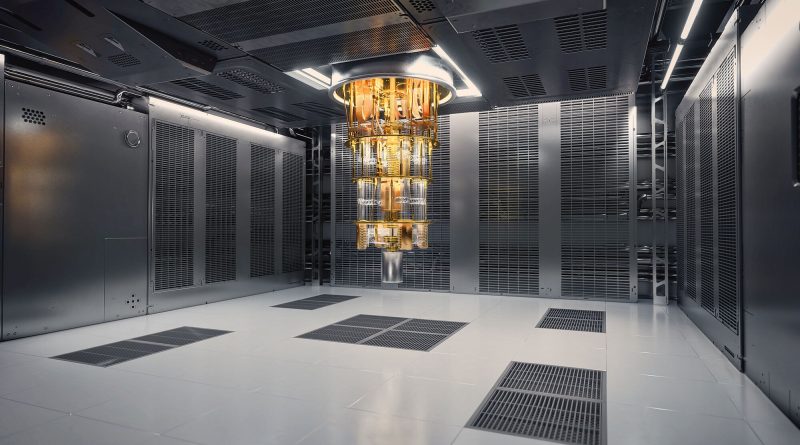
And let’s talk about the elephant in the room: these machines often require near-absolute zero temperatures. They’ll be accessed via cloud for the foreseeable future. So, your “infrastructure” knowledge expands to understanding latency, API integration, and specialized cloud services for quantum workflows.
A Pragmatic Roadmap for Getting Quantum-Ready
Feeling overwhelmed? Don’t. Here’s a staggered approach.
| Phase | Focus | Actionable Steps |
| Awareness (Now) | Foundational Knowledge | Take a free online course (edX, Coursera). Follow key players (IBM, Rigetti, Quantinuum). Subscribe to a few sensible newsletters. |
| Assessment (6-12 months) | Organizational Impact | Start a crypto inventory. Talk to vendors about PQC roadmaps. Identify a potential pilot use case (e.g., optimization in R&D). |
| Experimentation (1-2 years) | Hands-On Learning | Use cloud credits to run simple quantum circuits. Build a hybrid “hello world” app. Join an internal or external study group. |
| Integration (3-5+ years) | Strategic Planning | Develop a quantum IT policy. Plan for hybrid infrastructure. Consider talent pipeline (hiring, upskilling). |
Honestly, the goal in year one isn’t to solve a business problem with quantum. It’s to build enough internal literacy so you can separate the real opportunity from the vendor fantasy when the time comes.
The Human Element: Collaboration is Key
This won’t be a solo IT mission. You’ll be the bridge. You’ll need to translate between quantum algorithm developers (who speak physics and linear algebra) and business stakeholders (who want ROI). Your deep knowledge of classical systems—their constraints, their data flows, their strengths—makes you indispensable in making this hybrid future actually work.
It’s about asking the right questions, too. When a vendor promises quantum advantage, you’ll need to ask: What’s the error rate? How many qubits are logical vs. physical? What’s the classical compute overhead? Your skepticism, honed from years of IT projects, is a superpower here.
Final Thoughts: An Evolving Landscape
Look, the quantum computing timeline is fuzzy. Breakthroughs happen; setbacks are common. But the direction of travel is clear. For the classical IT professional, readiness isn’t about becoming an expert in quantum mechanics. It’s about strategic awareness.
It’s understanding the coming shift in cybersecurity so well that you can lead the PQC migration calmly. It’s having enough foundational knowledge to evaluate a quantum cloud service or a potential hire. It’s recognizing that the most powerful computing stack of the future will almost certainly be a blend of the classical bits we know and the strange, spooky qubits we’re just learning to tame.
The transition has already begun, quietly, in the background. The most prepared among us won’t just be watching it happen—they’ll be helping to build the bridge between these two worlds.