
Building a Career in DevOps: Essential Tools, Practices, and Skill Progression
So you want to break into DevOps? Or maybe you’re already in IT and looking to pivot. Honestly, it’s one of the most rewarding—and chaotic—paths you can take. You’re not just learning a tool; you’re adopting a mindset. A culture. A bit of controlled chaos. Let’s walk through what it actually takes to build a career here, from the gritty tools to the soft skills nobody talks about.
What DevOps Actually Is (and Isn’t)
First, let’s clear the air. DevOps isn’t a job title. It’s a philosophy that bridges development and operations. Think of it like this: developers build the car, operations keeps the engine running. DevOps? You’re the pit crew that tunes the car mid-race, changes tires at 200 mph, and hands the driver a fresh cup of coffee.
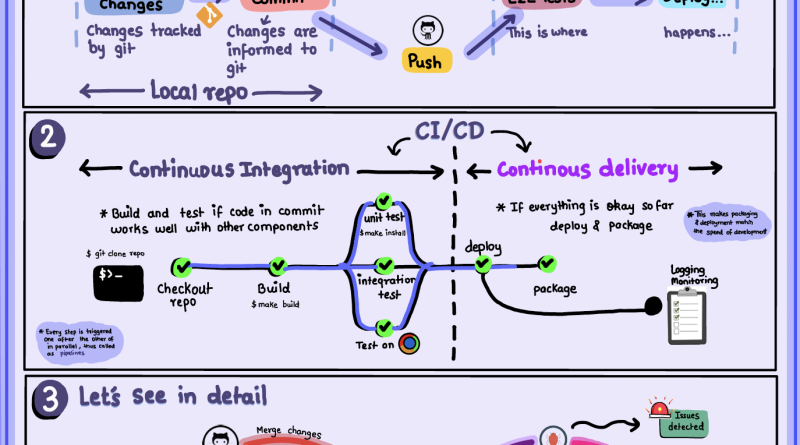
You’ll hear terms like “CI/CD pipelines,” “infrastructure as code,” and “monitoring.” But at its core, it’s about speed without breaking things. That’s the trick. And it’s harder than it sounds.
The Pain Points You’ll Face (and Why They’re Good)
Let’s be real—DevOps can feel like drinking from a firehose. You’ll deal with legacy systems that refuse to die. You’ll debug a YAML file for three hours only to find a missing space. You’ll get paged at 2 AM because a Kubernetes pod decided to take a nap. But here’s the thing: every outage teaches you something. Every broken pipeline sharpens your instincts. That’s the progression.
Essential Tools: The Toolbox You’ll Live In
You can’t build a house with just a hammer—and you can’t do DevOps with just one tool. But don’t panic. You don’t need to learn everything at once. Start with the core, then branch out. Here’s a rough map:
| Category | Tool | Why It Matters |
|---|---|---|
| Version Control | Git (GitHub, GitLab) | The foundation. Every change starts here. |
| CI/CD | Jenkins, GitLab CI, GitHub Actions | Automates testing and deployment—your best friend. |
| Configuration Mgmt | Ansible, Puppet, Chef | Keeps servers consistent. No more “it works on my machine.” |
| Containerization | Docker, Kubernetes | Packages apps so they run anywhere. Game-changer. |
| Infrastructure as Code | Terraform, CloudFormation | Treats infrastructure like code—repeatable, versioned. |
| Monitoring & Logging | Prometheus, Grafana, ELK Stack | Knows when things break before users do. |
| Cloud Platforms | AWS, Azure, GCP | Where everything lives. Pick one, learn it deeply. |
Now, a quick tip: don’t try to master all of these at once. Pick a stack—say, Docker + Kubernetes + Terraform + AWS—and build something real. A broken project teaches more than a perfect tutorial.
Practices That Separate Pros from Pretenders
Tools change. Practices stick. Here’s what you need to bake into your workflow:
- Continuous Integration: Merge code frequently. Test it automatically. Catch bugs early—before they become 3 AM nightmares.
- Continuous Delivery: Deploy to staging automatically. Production? Maybe with a manual gate. But automate everything else.
- Infrastructure as Code: Stop SSH’ing into servers. Write scripts. Version them. Treat your infrastructure like application code.
- Monitoring and Observability: Not just “is it up?” but “why is it slow?” Logs, metrics, traces—three pillars of sanity.
- Incident Response: Have a plan. Run drills. Blameless post-mortems—fix the system, not the person.
I once worked with a team that skipped monitoring. “We’ll add it later,” they said. Three weeks later, a silent memory leak crashed production. They added it the next day. Don’t be that team.
The “Soft” Skills Nobody Talks About
Here’s the thing—DevOps is as much about people as it is about pipelines. You’ll need to communicate clearly with developers who think ops is magic, and ops folks who think devs are reckless. You’ll need empathy. Patience. The ability to say “I don’t know, but I’ll find out.” That’s not weakness—that’s growth.
Skill Progression: From Rookie to Architect
Let’s map out a realistic path. You won’t jump from zero to Kubernetes wizard overnight. But if you follow this progression, you’ll build a solid foundation.
Stage 1: The Foundation (0–6 months)
- Learn Linux basics. Command line, file permissions, process management. You’ll live here.
- Master Git. Branching, merging, rebasing. Know it cold.
- Pick one scripting language: Python or Bash. Automate one boring task per week.
- Understand networking basics: DNS, HTTP, TCP/IP. You’ll debug them constantly.
At this stage, you’re not a DevOps engineer yet. You’re a curious tinkerer. That’s fine. Build a simple web app, containerize it with Docker, and push it to a cloud server. That’s your first win.
Stage 2: The Builder (6–18 months)
Now you’re getting your hands dirty. Focus on:
- CI/CD pipelines. Automate a build, test, and deploy cycle. Start with GitHub Actions—it’s beginner-friendly.
- Configuration management. Use Ansible to manage a few servers. Write playbooks that idempotent—run them twice, same result.
- Container orchestration. Learn Docker Compose first, then Kubernetes. Deploy a microservice app. Watch it scale.
- Cloud basics. Get certified in AWS or Azure. Not for the cert—for the hands-on labs.
You’ll break things. You’ll forget to set environment variables. You’ll accidentally delete a production database—well, hopefully not. But if you do, you’ll never forget to back it up again.
Stage 3: The Operator (18–36 months)
You’re comfortable with the tools. Now it’s about scale and reliability.
- Infrastructure as Code. Terraform is king here. Write modules. Manage state files. Handle drift.
- Monitoring and observability. Set up Prometheus and Grafana. Create dashboards that tell a story.
- Security. Learn about secrets management (Vault), image scanning, and compliance. Shift left.
- Incident management. Participate in on-call rotations. Write runbooks. Automate the boring recovery steps.
You’ll start mentoring juniors. You’ll review pull requests and say things like “this pipeline could be faster.” You’ll feel the weight of production—and the thrill of keeping it running.
Stage 4: The Architect (3+ years)
Now you’re designing systems. You’re not just using tools—you’re choosing them. You’re thinking about cost, resilience, and team workflows.
- Design multi-cloud or hybrid architectures. Decide when to use Kubernetes vs. serverless.
- Build internal platforms. Create self-service tools so developers can deploy without ops bottlenecks.
- Focus on culture. Implement blameless post-mortems. Foster collaboration between dev and ops.
- Stay current. Follow CNCF landscape. Experiment with edge computing, GitOps, or service meshes.
You’ll speak at meetups. Write blog posts. Your job title might be “Principal DevOps Engineer” or “Platform Architect.” But honestly? You’re still learning. That never stops.
Current Trends and Pain Points (2024–2025)
DevOps is evolving fast. Here’s what’s hot right now:
- Platform Engineering: Instead of giving devs raw Kubernetes, build a paved road with guardrails. It’s the next step.
- GitOps: Use Git as the single source of truth for infrastructure. ArgoCD and Flux are leading the charge.
- FinOps: Cloud costs are spiraling. DevOps engineers now need to optimize spending—not just uptime.
- AI-assisted operations: Tools like GitHub Copilot for infrastructure code, or AI-driven incident response. Don’t fear it; leverage it.
The biggest pain point? Burnout. On-call rotations, constant firefighting, and tool fatigue. The solution? Automate yourself out of the boring stuff. Invest in documentation. Build a culture of shared responsibility. Your future self will thank you.
How to Keep Learning (Without Drowning)
There’s an ocean of content out there. Here’s how to stay afloat:
- Follow one or two thought leaders (Kelsey Hightower, Bridget Kromhout). Don’t try to read everything.
- Build side projects. A home server, a personal dashboard, a bot that tweets when your coffee machine is empty.
- Join communities. r/devops, DevOps Discord servers, local meetups. Ask dumb questions—everyone started somewhere.
- Take breaks. Seriously. Step away from the terminal. Go for a walk. Your brain needs to decompress.
The Bottom Line
Building a career in DevOps isn’t about collecting certifications or memorizing commands. It’s about embracing a mindset of continuous improvement—both for systems and for yourself. You’ll fail. You’ll learn. You’ll automate the boring stuff so you can focus on the interesting stuff. And one day, you