
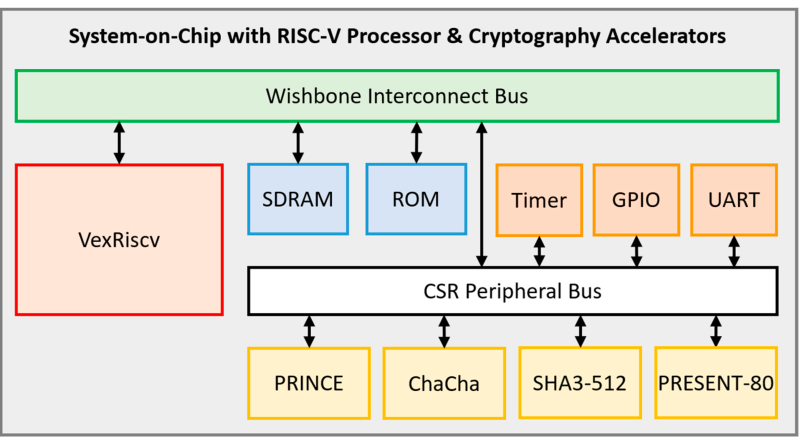
RISC-V Architecture and the Future of Open-Source Processors
Picture a world where the chip inside your phone, your laptop, even your car’s brain isn’t locked behind a licensing fee or a corporate wall. That’s not some distant utopia — it’s the promise of RISC-V, and honestly, it’s closer than most people think.
RISC-V (pronounced “risk five”) is an open-standard instruction set architecture. Translation? It’s a blueprint for how a processor understands commands. And unlike the proprietary designs from ARM or Intel, anyone can use it, modify it, or build on it — for free. No royalties. No permission slips. Just pure, unfiltered innovation.
Why RISC-V Feels Like a Breath of Fresh Air
For decades, the processor world has been a gated community. ARM dominates mobile. x86 rules the desktop and server roost. If you wanted to design a chip, you either paid up or begged for a license. That model worked… sure. But it also stifled smaller players and slowed down experimentation.
RISC-V flips that script. It’s modular, meaning you can start with a tiny core and add only the extensions you need. Think of it like ordering a custom sandwich instead of buying a pre-wrapped one. You want vector processing? Add it. Need security features? Bolt them on. No bloat, no wasted silicon.
Key stat: The RISC-V Foundation (now RISC-V International) has grown from a handful of members in 2015 to over 4,000 members globally as of 2024. That’s not a niche club anymore.
The Technical Bits — Without the Headache
Let’s break it down without drowning in acronyms. RISC-V is a RISC architecture, meaning it uses a small, highly optimized set of instructions. That’s the opposite of complex instruction set computing (CISC), which tries to do everything in one go.
Here’s the deal: simple instructions can run faster and use less power. That’s why RISC-V shines in embedded systems, IoT devices, and even AI accelerators. It’s not just for tiny chips, though. Companies are building server-class RISC-V processors now.
And because it’s open, you can audit the design. No hidden backdoors. No mystery microcode. For security-conscious industries — finance, healthcare, government — that’s a massive selling point.
Core Features at a Glance
| Feature | What It Means for You |
|---|---|
| Open standard | No licensing fees, no vendor lock-in |
| Modular design | Add only what you need — save power, cost, and area |
| Scalable | From microcontrollers to supercomputers |
| Community-driven | Rapid innovation, shared toolchains, and reference designs |
Real-World Momentum (It’s Not Just Hype)
You might be thinking, “Okay, open-source processors sound nice, but who actually uses them?” Fair question. Here’s the answer: a lot of people, and the list is growing fast.
Western Digital shipped over a billion RISC-V cores in its storage products. SiFive, a company founded by the original RISC-V creators, powers everything from AI edge chips to automotive systems. Even Google, Qualcomm, and NVIDIA are investing heavily.
And then there’s the European Union. They’re pouring billions into RISC-V research to reduce dependence on foreign chip designs. In fact, the EU’s EuroHPC initiative is funding RISC-V-based supercomputers. That’s not a side project — that’s strategic infrastructure.
The Challenges — Because Nothing’s Perfect
Let’s not pretend RISC-V is a magic wand. It has hurdles. The biggest one? Software maturity. ARM and x86 have decades of optimized compilers, operating systems, and applications. RISC-V is catching up, but it’s not there yet for every use case.
Fragmentation is another worry. Because anyone can add extensions, you could end up with a dozen “RISC-V” chips that aren’t fully compatible. The community is working on certification and profile standards, but it’s a work in progress.
And well, old habits die hard. Big companies have invested billions in ARM and x86 ecosystems. Switching costs are real. But for new projects — especially in AI, IoT, and custom silicon — RISC-V often wins on flexibility and cost.
What This Means for the Future of Open-Source Processors
Here’s where it gets exciting. RISC-V isn’t just another architecture. It’s a shift in power. Instead of a few giants deciding what chips can do, thousands of developers, startups, and researchers can experiment.
Imagine a future where your smart home devices run on chips you can actually inspect for security flaws. Where a university team in Nairobi or Bangalore can design a custom processor without paying six-figure license fees. Where innovation happens at the edges, not just in Silicon Valley boardrooms.
That’s the open-source promise. And RISC-V is delivering it — slowly, messily, but undeniably.
Three Trends to Watch
- AI at the edge: RISC-V’s modularity makes it ideal for custom AI accelerators that sip power instead of guzzling it.
- Automotive: Cars need safety, security, and long-term support. RISC-V’s open nature lets automakers audit every line of code.
- Datacenter efficiency: Hyperscalers like Google are exploring RISC-V for storage and networking offload. Less licensing overhead means more profit.
Should You Care? (Spoiler: Yes)
Even if you never touch a chip design tool, RISC-V affects you. It influences the price of your next phone, the security of your medical devices, and the pace of AI innovation. Open-source processors aren’t a fringe idea anymore — they’re the quiet revolution happening under the hood of modern tech.
And honestly? It’s about time. The proprietary model gave us amazing things, but it also created bottlenecks. RISC-V removes those bottlenecks. It lets a thousand flowers bloom — some will wilt, sure, but the ones that survive could change everything.
So next time you hear “RISC-V,” don’t glaze over. Think of it as the Linux of hardware. Messy, collaborative, and slowly eating the world. The future of open-source processors isn’t a distant dream. It’s being taped out in fabs right now.